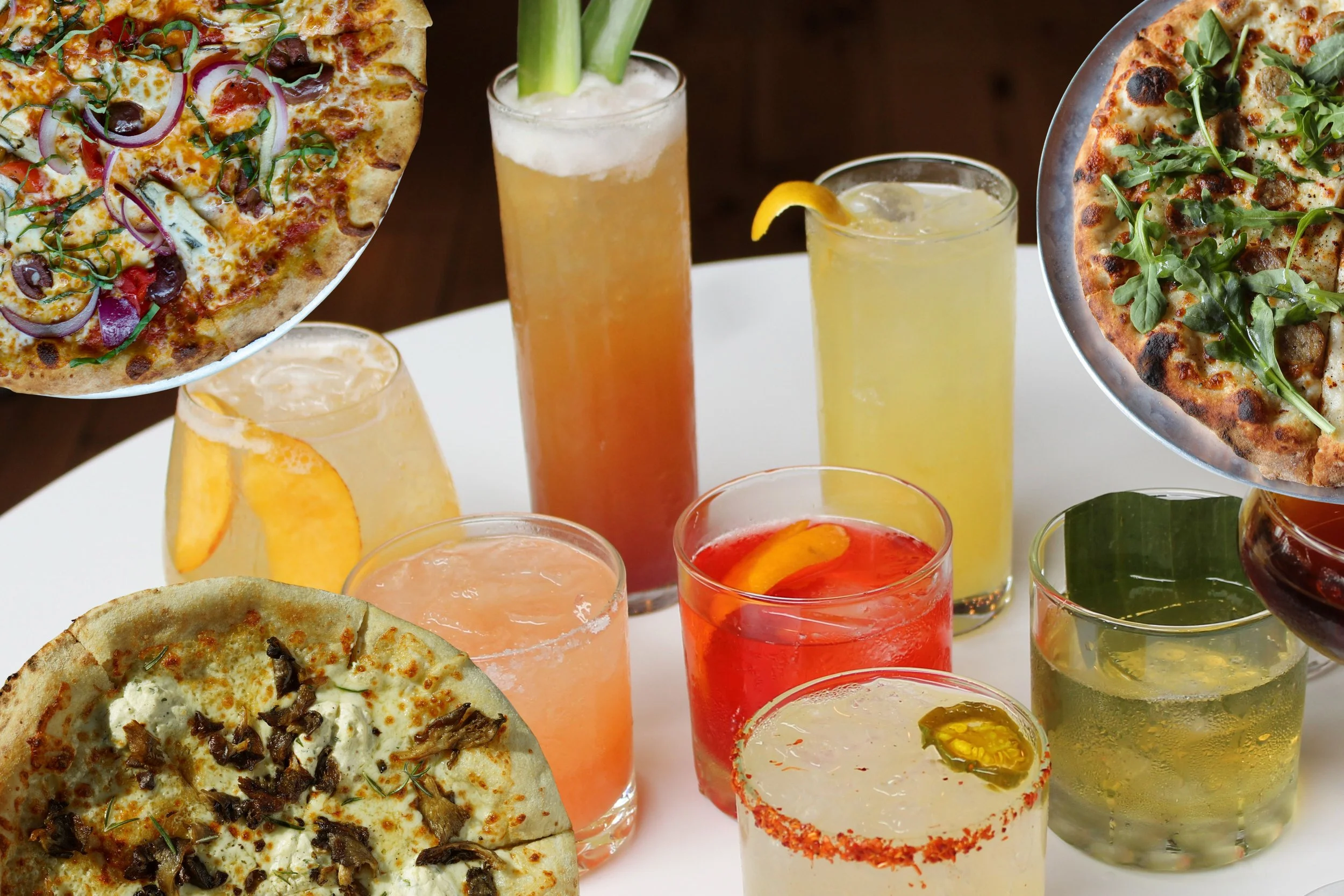
Bread and alcohol are the same ancient accident. Grain, water, yeast, time. The starting point is identical. What diverges is the ratio — water content, sugar availability, which organisms get favorable conditions — and those ratios determine everything. A high-hydration environment favors the bacteria that produce acid. A sugar-rich one favors the yeast that produce alcohol. The brewer and the baker are having different conversations, but with the same team members.
Neither of them is really in charge. That's the part that separates fermentation from everything else a kitchen or a bar does. Line cooking is fast and reactive — you taste, you adjust, you move. Heat, acid, salt, fat all submit to the cook. Fermentation doesn't submit to anyone. It has its own clock, its own logic, and it will not be rushed without consequence. You can manipulate the conditions. You cannot manipulate the result.
The distiller learns this. So does the brewer — watching a fermentation tank, adjusting temperature by degrees, waiting on gravity readings that will tell him whether the yeast have finished what they started. The winemaker picks a harvest date based on sugar levels she didn't set and can't control. In every case the professional is doing the same thing: creating favorable conditions and then getting out of the way.
This is what the bar and the kitchen share that doesn't show up on the menu. The cook, in this one corner of the operation, is not making decisions. The microorganisms are. The work is waiting, and paying attention, and knowing the difference between intervening and interfering.
We keep a sourdough starter in this kitchen. She's been here longer than most of the people who tend her. Her name is Beatrice, and she is the base of every pizza that comes out of this kitchen.
She rises when she's ready. Fermentation has never worked any other way.
- Paul