Ingredients Without Borders

Every cuisine you've ever eaten started somewhere specific and arrived somewhere else changed. Not corrupted, slightly altered, changed as seen fit. The chili pepper is native to the Americas and now defines the food of Sichuan, of Korea, of Hungary. The tomato is from Mexico and you cannot imagine Italian cooking without it. The potato, Andean, originally utilized by people who had been cultivating it for seven thousand years is now in pierogi, in gnocchi, in aloo gobi, in Joel Robuchon's pommes purée. One ingredient. Every continent. Completely different results depending on who got hold of it and what they needed it to do. Ingredients don't respect borders, and neither do techniques. They move with people, get adopted by other people, get adapted to different climates and different pantries, and eventually stop being foreign entirely. That's not fusion. That's just how food works.

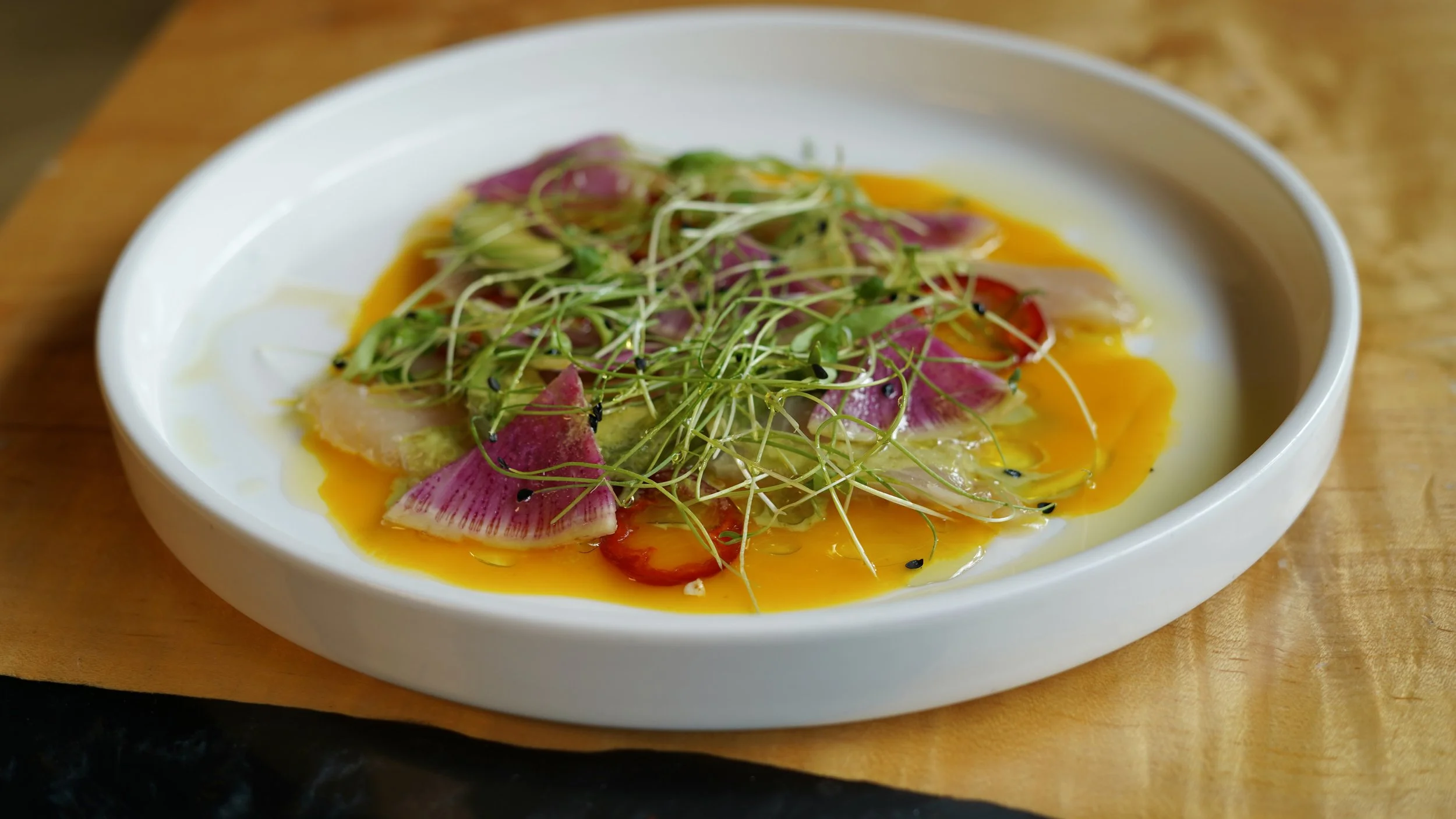
What's happening now is faster. A chef in Lancaster can source gochujang, Aleppo pepper, galangal, paneer, fish sauce, sumac…things that twenty years ago required a specialty trip to a city like Philadelphia or New York to a specific block or neighborhood. The global pantry is available at a regional level in a way it simply wasn't before. That changes what's possible in a kitchen. Not because it's trendy to reach for those ingredients, but because they're genuinely better for certain applications. Fish sauce in a braise. Miso in a butter sauce. Calabrian chili where you'd otherwise use generic heat. These aren't gestures toward authenticity. They're craft decisions.

The conversation about where a dish comes from is worth having, who developed it, what it means in its original context, what gets flattened when it travels. There’s a difference between using sudachi ponzu and understanding why it works. 

But it doesn't require cooks to stop cooking. It requires them to know what they're actually working with: the history contained in the ingredient, not just the flavor.

-Paul

The Women Who Bring Us to the Table

I can still picture my grandmother's rounded shoulders at the stovetop. Gigi. Always turned slightly away from the room, tending to something, never quite done.

My grandfather and I played checkers at the kitchen table while she cooked…the old oblique wood table with the plastic-pillowy runners she saved for the holidays or when everyone decided to show up on a Sunday in July…sticking to your forearms from the heat.

Gigi was Czech and Austrian. Not a drop of Italian in her. Which makes it all the more remarkable that the dish I've spent 20+ years trying to recreate is her spaghetti and meatballs.

She had her go-to spots. House-made deli meats. Old school marinara made fresh daily. Meatballs from the people who made them right. She didn't always make everything herself, that was the skill. She assembled the Sunday table, everything the best available version of itself.

The drives to the bakery in Greenwich for fresh rolls are why I still prefer a turkey sandwich on a poppy seed kaiser roll. Not because I decided to. Because she decided for me, a long time ago.

I last tasted that spaghetti thirty-some years ago on a random Sunday. I'm still trying to get it right. Certain dishes just get into you and stay.

My wife had her own version of this. A different kitchen. The same understanding. Both of those women are gone now.

Our son was born on Mother's Day last year. He made that call himself. The joy of that day I'll carry forever. So will the quiet suspicion that he already knows exactly what he's sitting on.

He'll never sit at either of those grandmothers' tables. But a recipe is never just a list of ingredients. It's a way of bringing someone back to the table, whether they're in a different city or 25 years gone. She's in every plate of spaghetti I taste and decide isn't quite right.

We see that same thing in this building every week. The women on this line, on this floor, behind this bar who show up on the hard Sundays the same way they show up on every other shift. Who carry the kind of knowledge that doesn't get written down. Who feed, tend, care, love, guide, discipline and congratulate people well without needing the credit for it.

That's what Gigi did. That's what all of them do.

Shout out to our PD moms: Ashley, Leyanet, Erin, Olivia, Jess, Julie, Meghann, Miranda, Lauren, Christina & Dalia

To the women who set those tables…at home, in this space, on this floor- today is yours.

And today belongs to all of them. The mothers by blood and the mothers by choice. The ones who raised you and the ones who stepped in when someone needed to. The grandmother who showed up every Sunday. The women at work who saw something in you before you saw it yourself. The friend who fed you when you needed feeding and asked nothing about it. Motherhood is less a title than a practice. The daily decision to tend to someone else's life as carefully as your own.

-Paul

What Fermentation Decides

Bread and alcohol are the same ancient accident. Grain, water, yeast, time. The starting point is identical. What diverges is the ratio — water content, sugar availability, which organisms get favorable conditions — and those ratios determine everything. A high-hydration environment favors the bacteria that produce acid. A sugar-rich one favors the yeast that produce alcohol. The brewer and the baker are having different conversations, but with the same team members.

Neither of them is really in charge. That's the part that separates fermentation from everything else a kitchen or a bar does. Line cooking is fast and reactive — you taste, you adjust, you move. Heat, acid, salt, fat all submit to the cook. Fermentation doesn't submit to anyone. It has its own clock, its own logic, and it will not be rushed without consequence. You can manipulate the conditions. You cannot manipulate the result.

The distiller learns this. So does the brewer — watching a fermentation tank, adjusting temperature by degrees, waiting on gravity readings that will tell him whether the yeast have finished what they started. The winemaker picks a harvest date based on sugar levels she didn't set and can't control. In every case the professional is doing the same thing: creating favorable conditions and then getting out of the way.

This is what the bar and the kitchen share that doesn't show up on the menu. The cook, in this one corner of the operation, is not making decisions. The microorganisms are. The work is waiting, and paying attention, and knowing the difference between intervening and interfering.

We keep a sourdough starter in this kitchen. She's been here longer than most of the people who tend her. Her name is Beatrice, and she is the base of every pizza that comes out of this kitchen.

She rises when she's ready. Fermentation has never worked any other way.

- Paul

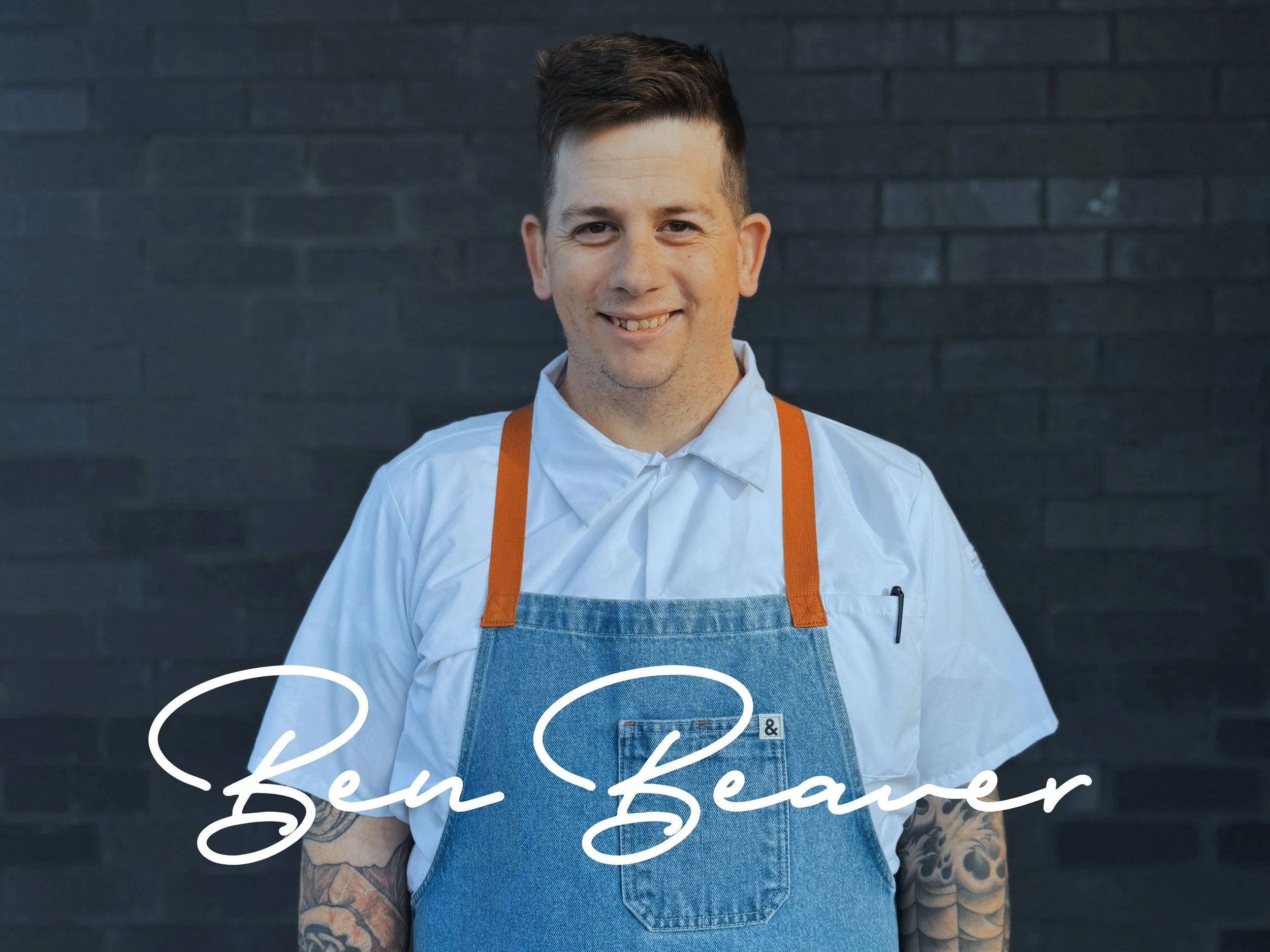
Meet the Chef: Ben Beaver of Per Diem

After twenty years in kitchens, Chef Ben Beaver has learned what most cooks only figure out the hard way: the best plates are usually the ones where the chef got out of the way.

"My cooking has changed in the last five years," he says. "Better techniques, better in-season ingredients, and just not trying to do too much. Let the ingredients talk."

That philosophy shapes the food at Per Diem, where Ben leads the kitchen with a focus on modern American cooking built around intentional, seasonal ingredients and bold, balanced flavor. More than a decade into running kitchens as an Executive Chef, the thing that still drives him is the same thing that got him here — developing new dishes, refining systems, and building a team that actually wants to show up for each other.

Ben grew up in Harrisburg and has spent his career moving toward kitchens that feel less like pressure cookers and more like crews. Ask him what he's most excited about at Per Diem and he doesn't lead with a dish — he leads with people. "The chance to keep growing professionally, stay creative, and create experiences that people genuinely enjoy — that's what excites me most."

His best food memory isn't in a kitchen. It's San Francisco, with his wife. "The whole experience was about food." You can hear it in the way he talks about plates now — as experiences, not just dishes. The trip didn't just stick; it shifted something.

In the kitchen, it's a scratch bowl of ramen — broth built from the ground up, noodles, soy egg, pork shoulder, garnish, the full build. It's the one he loves to make most in a professional setting. But if he's the one eating? Street tacos. Every time.

Other Favorites: 

  • Cookbook on the shelf: Made in Spain, José Andrés

  • Book that isn't a cookbook: Can't Hurt Me, David Goggins

  • Most prized kitchen possession: his set of Yoshihiro knives

  • Chef he wishes he could have staged with: Marco Pierre White

  • Off the clock: Orioles games, trying new restaurants, time with his wife

Ben's cooking today is a quieter version of what it used to be. Fewer components. Cleaner technique. A deeper trust in what a perfect in-season ingredient can do on its own. It's the version of a chef you want running your kitchen — confident enough to let the food do the talking.

Eclectic by Design

On Purpose.

Eclecticism, done right, isn't a lack of identity. It's a wider one. It's a kitchen that's curious about the world and honest about what people actually want to eat. Modern American. Vegetable focus. Asian flavors. Italian. Fish Cookery. Continental Inspiration. Food grown in Lancaster soil. 

Per Diem's menu is eclectic in the truest sense — not because we couldn't decide, but because we didn't want to. Because the people who walk through this door don't fit a single profile either. There's the hotel guest who flew in from somewhere and just wants a properly cooked filet with potatoes and a good demi.   Something familiar in a new environment. There's the Lititz local who wants a solid happy hour. They know when their favorite bartender is there making drinks and slinging friendly banter.  There's the production crew that's been on the Rock Lititz campus, who just want some crispy wings and a beer before last call, so they can crash for the night to do it all again the next day. 

We cook and serve for all of them. And we don't think that's a contradiction.

What holds it together isn't a specific cuisine — it's a standard. And a point of view. The food and the bar program are speaking the same language: curious, grounded, unwilling to be copy and paste. There are a thousand restaurants that picked a lane and stayed in it. Safe menus. Predictable pours. Rinse and repeat…Nothing wrong with that. But there's something that happens when a kitchen and a bar decide to stay open — to influences, to seasons, to the person sitting down who didn't know what they wanted until it arrived. That's the space we occupy. Not the restaurant that's easy to explain. The eclectic one that's hard to forget.

That's the whole idea. 

-Paul

When the Kitchen Starts to Hum: Spring at Per Diem

Spring doesn't arrive in Lancaster County so much as it insists. One week the fields are nothing, and the next, everything happens at once — ramps, asparagus, the first real lettuces. When the farmers and purveyors we trust have something worth having, we move on it. That's when the kitchen starts to hum.

And right now, it's humming.

There's a sound to a kitchen finding its season — the high heat sizzle, the rhythm of a knife breaking down something that was in the ground two days ago, the way a sauce reduces into something that stops you mid-stride. That energy moves. It crosses the pass, hits the dining room, and lands at your table whether you know it or not. You taste it in the brightness of a dish that couldn't have existed in February. You feel it in the room.

We feed a pretty extraordinary mix of people in this room. Hotel guests finding their footing in a new town, still deciding what kind of day they're about to have. Lititz and Lancaster locals who've made us part of their rhythm. The Rock Lititz campus crew needing food that can keep up. Production teams mid-run who don't have time for bad meals. What they all have in common is simple: they deserve something worth eating.

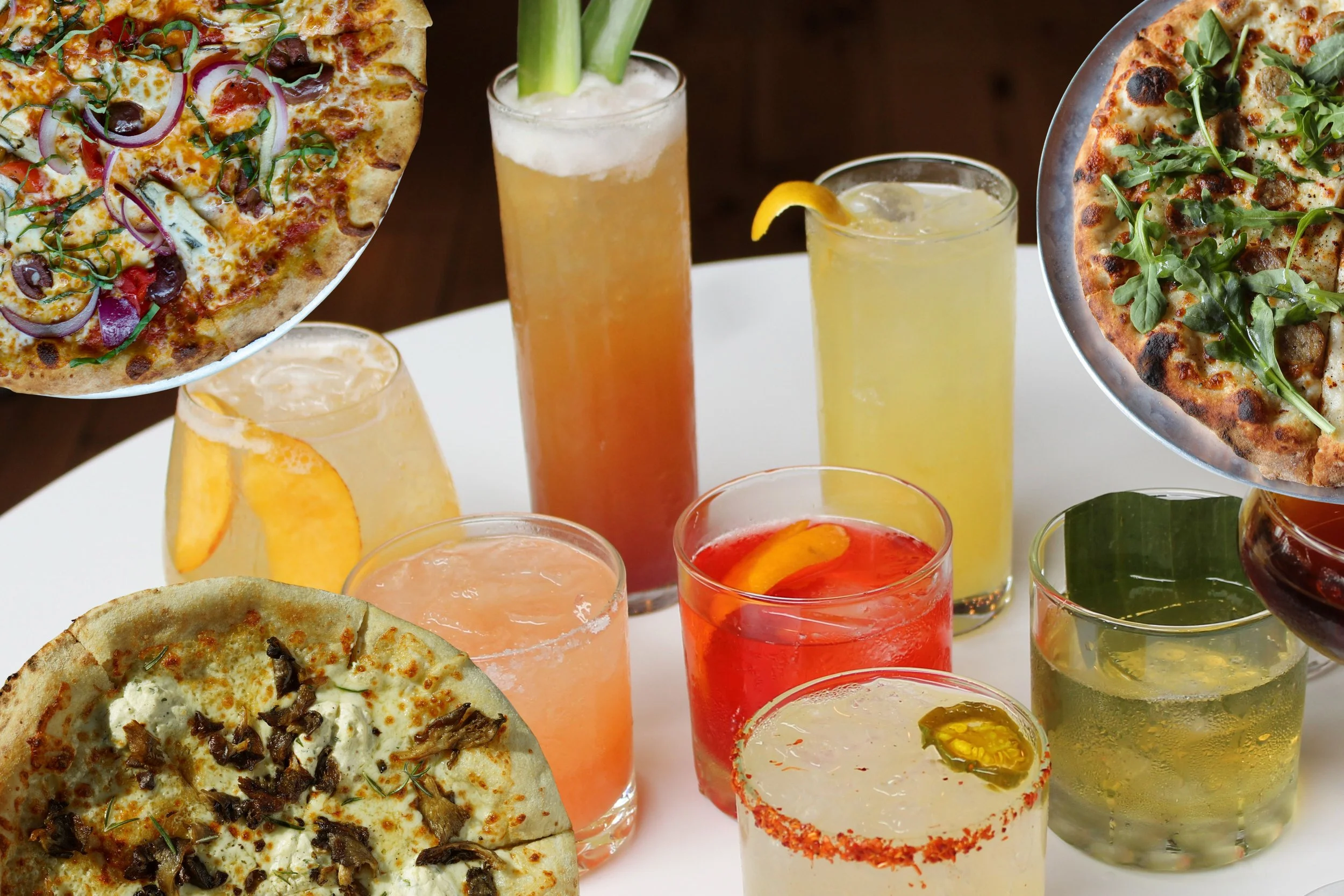
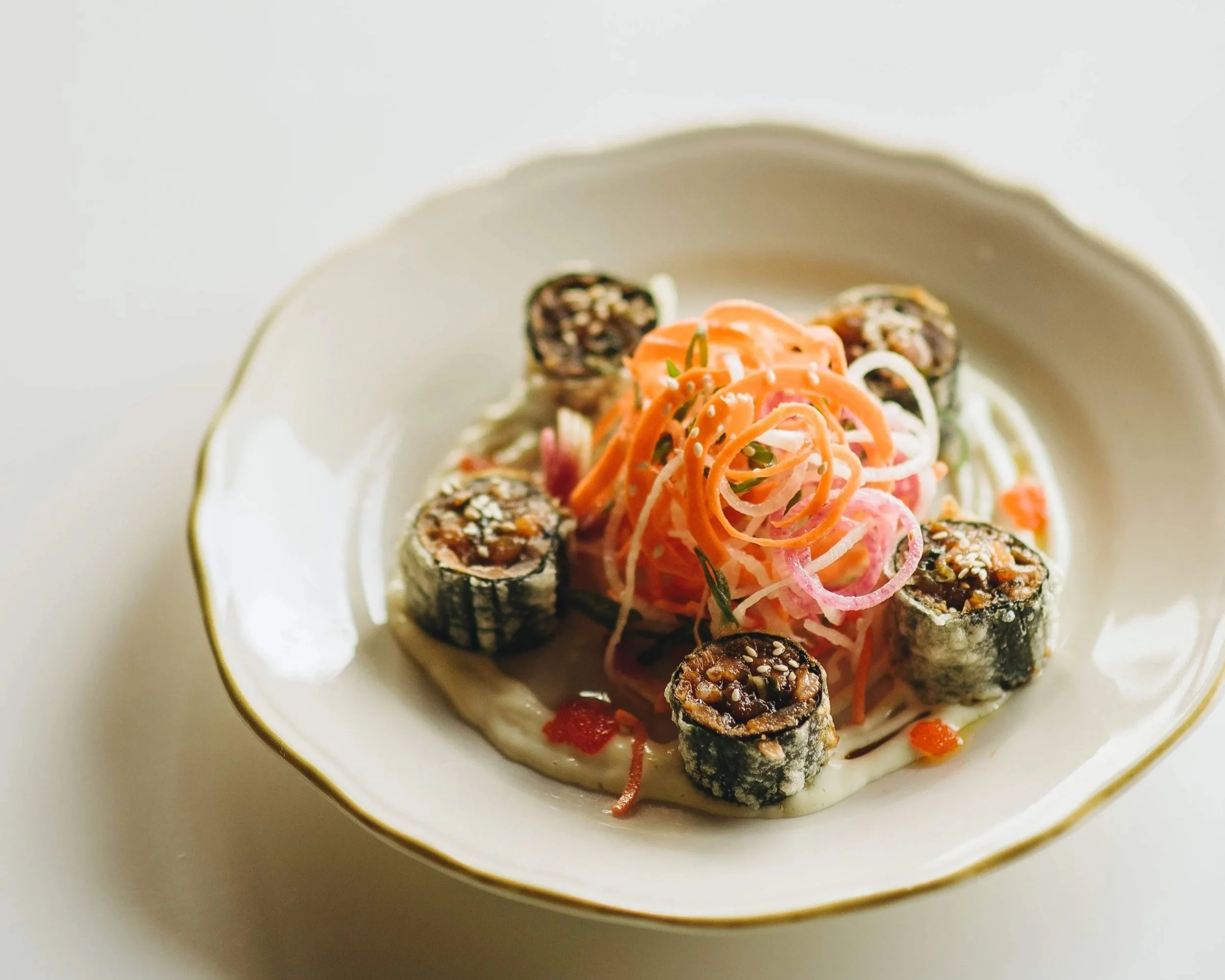
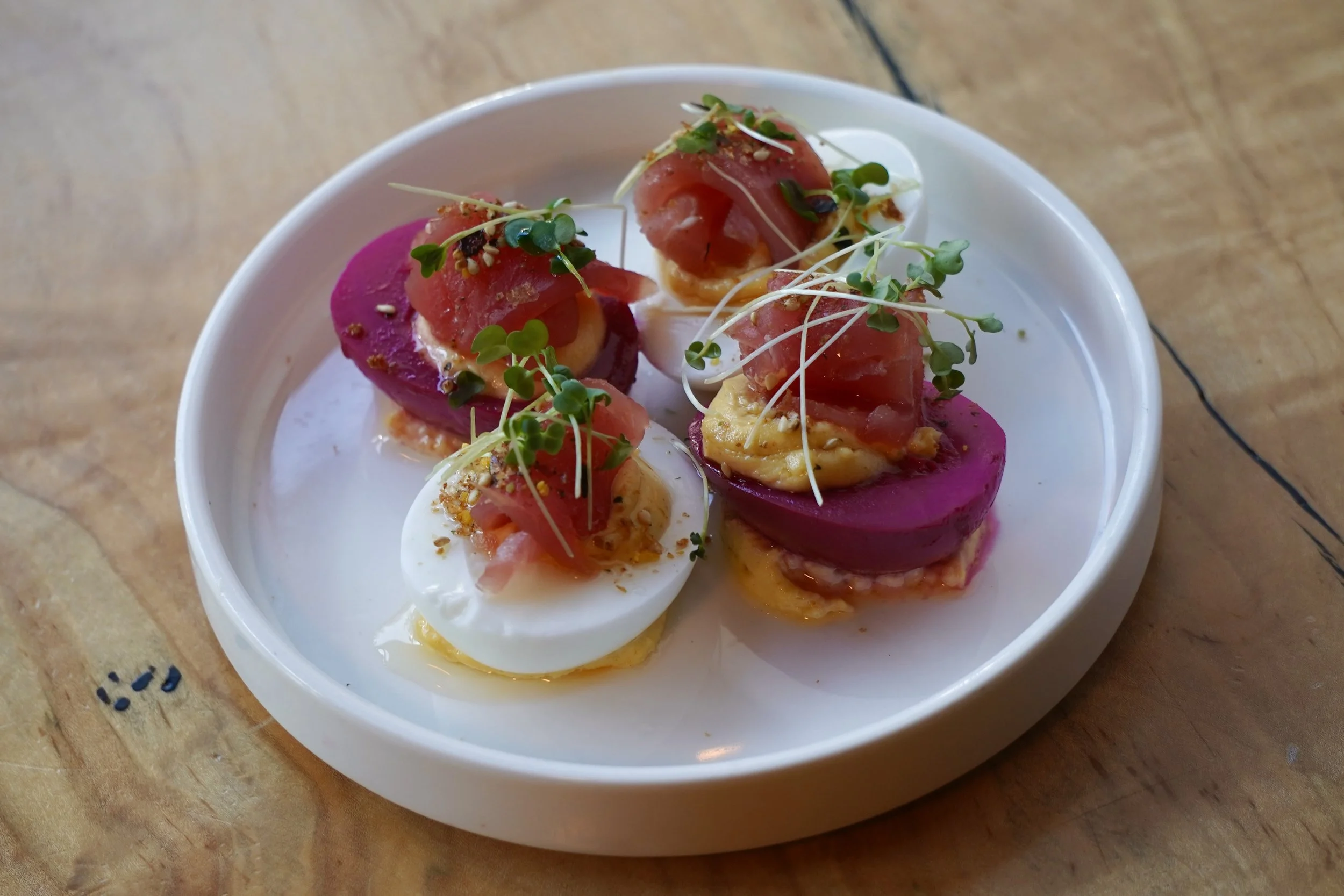
Starting April 22nd, that means updated pizzas, new entrees built around what's actually good right now, and appetizers that hit the way first bites should — a little bright, a little unexpected, the kind of thing that makes the table lean in. Lighter dishes. Bolder flavors. The kind of food that sounds as good as it tastes.

These ingredients have a window.

-Paul