
Every culture has cooked over fire. Some anthropologists argue it's how we got here, that cooking meat over flame is what allowed the human brain to develop, that we are, in some measurable sense, a species shaped by the fire of a grill. The tools change, the grates, the fuel, the cuts of meat, but the instinct doesn't. You put food over flame and something happens that doesn't happen any other way. The char, the smoke, the particular violence of direct heat.
April comes and the weather shifts, not warm, just less cold, something the kitchen responds to. The grate gets brushed. There's a strange logic to it, that as the air finally warms, the instinct is to cook over more heat, not less. Hotter days, hotter fire.
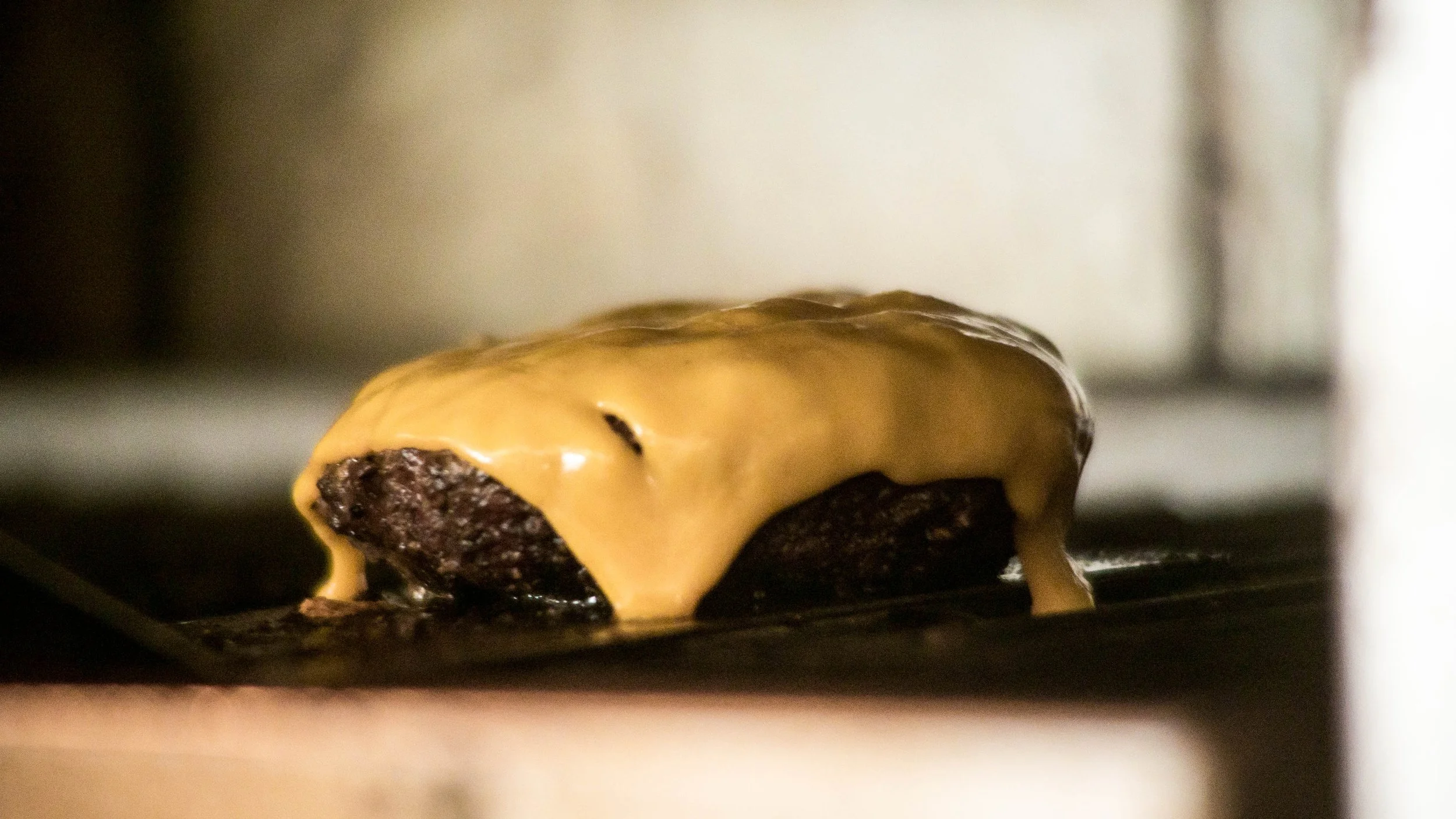
The asparagus blackens at the tips first. The bread takes on color in the places where it touches iron. The burger, good beef, seasoned, sits on the grate and the fat runs and the smoke comes up around it and you leave it alone because that's the whole job right there. Leaving it alone.
There's a sound a steak makes when it hits a hot grate, not a sizzle, a crack. Fat hitting iron that's been building heat for an hour. You smell the char before you see it. Something settles. The steak is where most cooks give themselves away. They move it too soon, cut into it too early, can't resist knowing. Chef Ben resists. He's looking at the color, the crust forming at the edge, and he's waiting for something that isn't on a timer.
At Per Diem the grill pulls from wherever the menu is going with specials for the week. One week there's something with harissa, the next a preparation that owes more to Southeast Asia than Lancaster County. The grill is where those ideas get tested against something real. Spice rubs, marinades, finishes built from ingredients that didn't grow anywhere near here, they all end up on the same grate, over the same fire for Chef and his crew.
-Paul
