
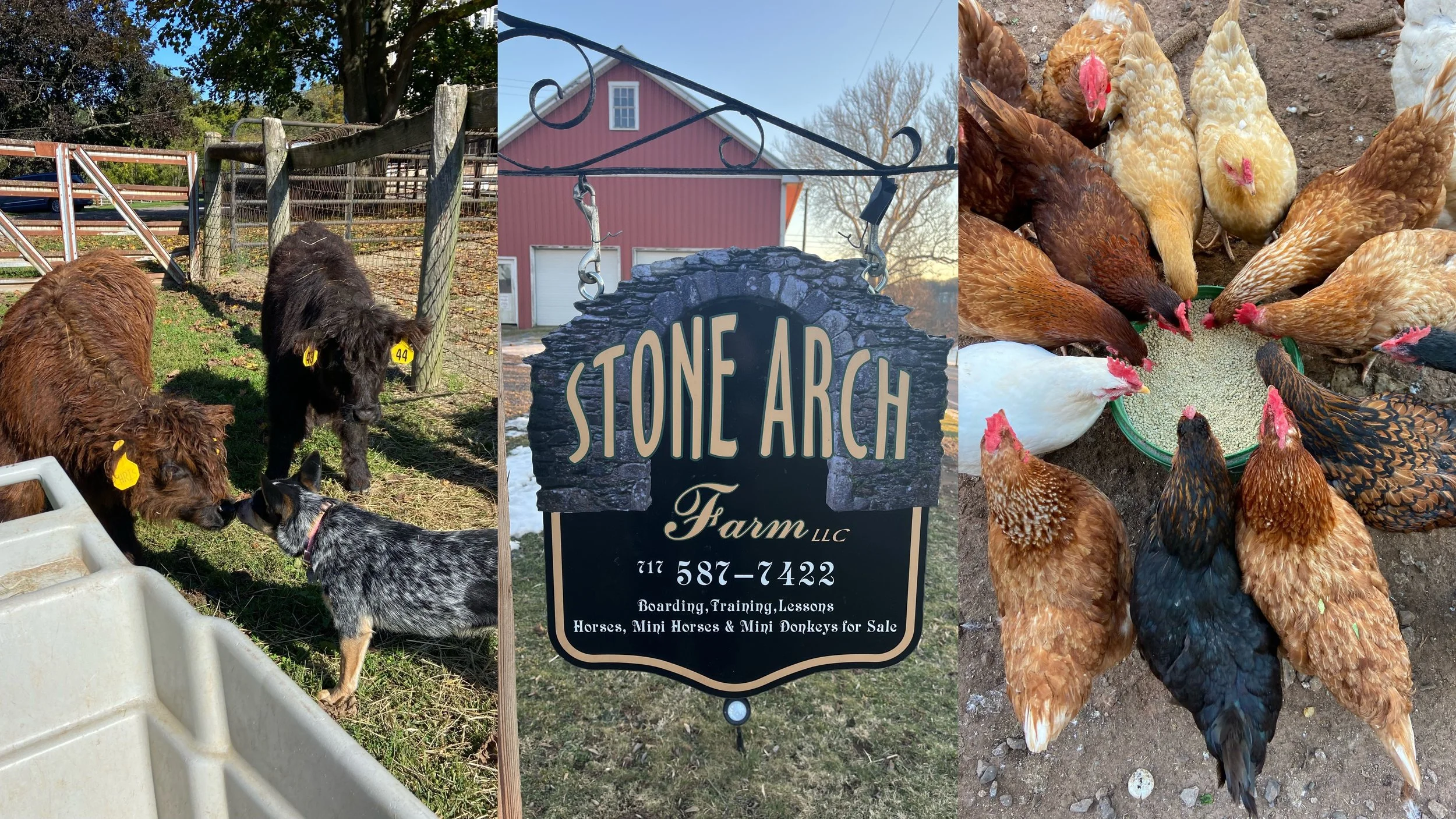
Ten minutes down the road from Per Diem, next to Speedwell Forge and the Wolf Sanctuary, Steve and Allison Garman run Stone Arch Farm. I worked for them. We started with 100% purebred Mangalitsa pigs, foraging the property on their own, and added the Scottish Highland cattle later. Grass fed, grass finished. Steve and his family cut the hay and grow the barley themselves for supplemental feed. The only shot any of those animals ever got was iron, at birth. No hormones, no antibiotics. I sold that meat to chefs and restaurants in Lancaster, in Philadelphia, in New York, in Washington D.C. I knew what I was selling because I'd walked the pasture it came from.
So when Ben put a Stone Arch Highland strip steak on the Table 14 tasting menu, I wasn't tasting a new ingredient. I was tasting what happens when the person cooking it knows exactly what animal it came from.
Highland cattle don't carry fat the way a commodity steer does. The breed grew that heavy double coat instead, because in the Highlands the hair does the job of keeping an animal warm and the fat doesn't have to. No subcutaneous layer means no fat cap on the strip, the part of a commodity steak thick enough to render, baste the meat from outside, buy you a few extra minutes of forgiveness on the heat. Take that cap away and the loin runs narrower too. What fat is there lives inside the muscle as marbling, not outside it as a cushion.
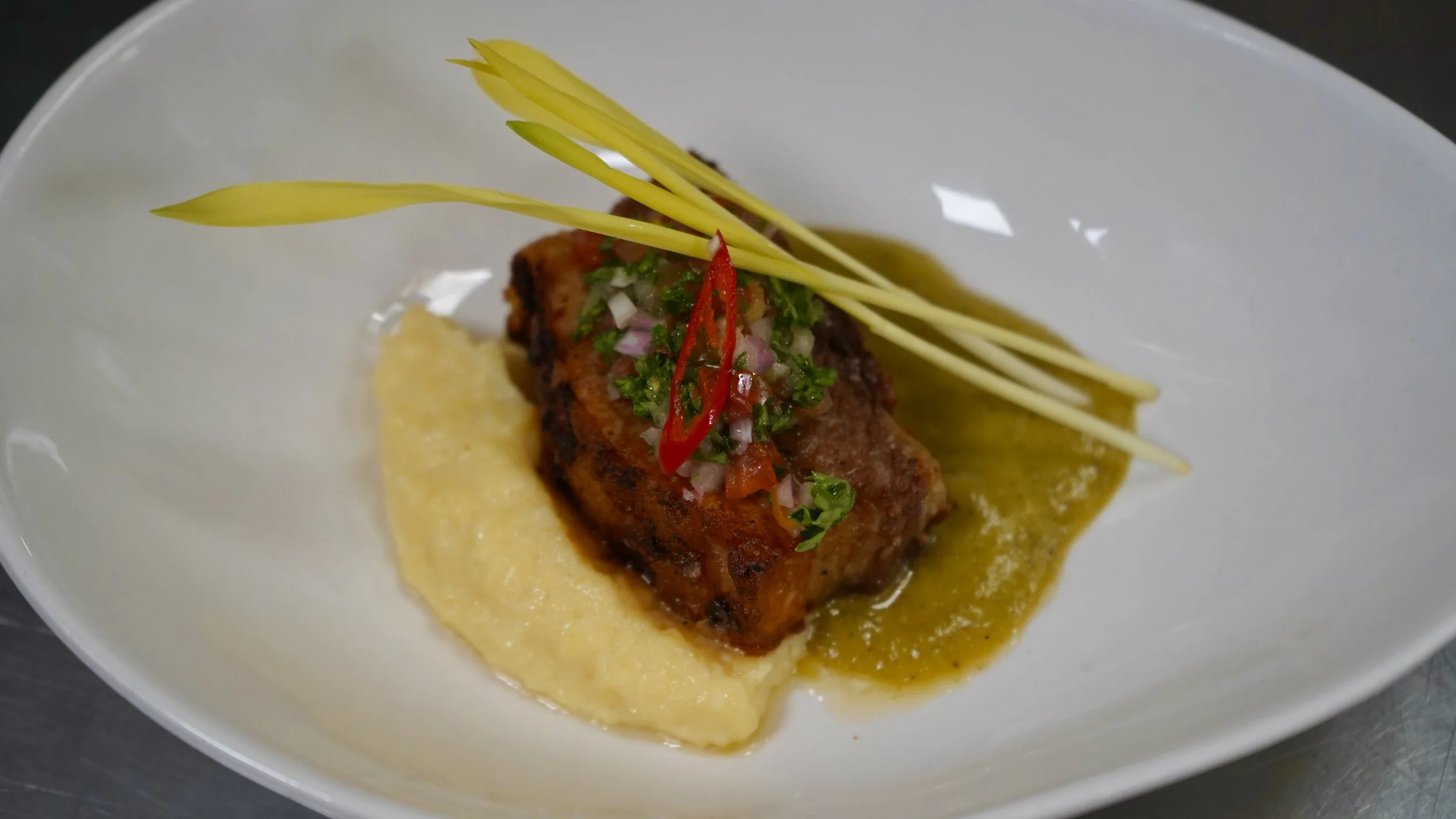
That's the gap between cooking a cut and cooking an animal. Most kitchens buy "NY Strip" and run one method against whatever shows up under that name, whether it grew up on pasture at Stone Arch or in a feedlot somewhere with a different zip code. I spent a few years on the other end of that supply chain. I can see and taste which farms come correct, which animals lived the life the menu claims they lived.
The steak came off dark at the center, closer to the deep red of a working animal than the bright pink of a feedlot cut. Dense and mineral, with a faint gaminess underneath, the taste of grass and herbs instead of grain. The grain of the meat is tighter too, firmer under the knife, more flavor per bite because there's less fat standing between your tongue and the muscle. You don't get there by treating Highland beef like a leaner version of something else. You get there by knowing the animal before you ever turn on the flame.
-Paul
