
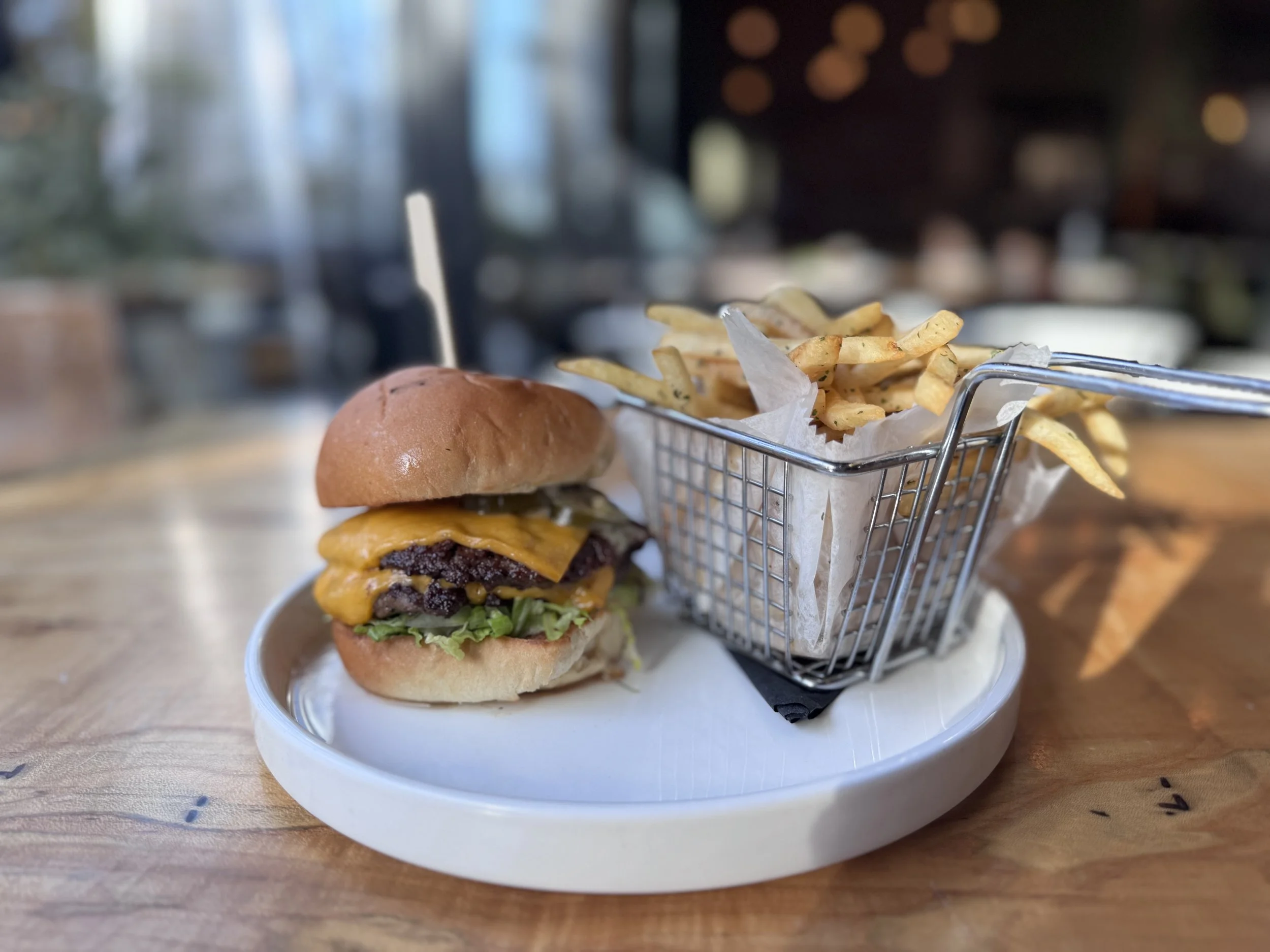
There's no single origin story for the smash burger, just competing theories. Some trace it to state fairs in the early twentieth century, where portable griddles flattened ground beef for speed in front of lines that didn't stop moving. Others place its roots in the Depression, when meat was expensive and scarce, and stretching a pound of ground beef across more patties, cooked hard and fast on a flat top, fed more people for less money. Both theories agree on the underlying logic. Speed mattered, and a flattened patty cooked through in under a minute, which meant a single griddle could turn out a meal as fast as a line could move past it.
What both origins share is necessity. The smash burger wasn't invented by anyone chasing flavor, it was the byproduct of scarcity and volume, the kind of cooking that happens when there isn't enough money or time to do it any other way. Somewhere in the last decade, a technique born from having less turned into a technique people pay extra for. The crust that used to be a side effect of stretching meat thin is now the entire point.
The technique stayed practical straight through the diner era that followed. Diners and drive-ins were smashing patties on flat tops in the mid-twentieth century, mostly out of necessity. Flattening the meat meant faster cook times, more burgers per shift, less propane burned waiting for a thick patty to come up to temperature. Steak n Shake and the original In-N-Out both built early identities around thin, hard-seared patties, though nobody was calling it a smash burger then. It was just how you cooked a burger fast and cheap.
What makes the method work is surface area. A thin patty forced hard against a hot flat top develops a crust through the Maillard reaction almost instantly, that deep brown lace of caramelized protein and fat you don't get from a thick patty cooked slow. Nobody should temp a smash burger. There's not enough mass in a quarter inch of meat for a thermometer to tell you anything useful, and by the time you got a probe in there you'd have already blown past the window. The whole format runs on time and sight instead, thirty seconds until the edges lace and the color shifts, a flip, maybe fifteen seconds more with the cheese melting on top before it comes off. The thinness that makes the crust possible also means the patty cooks through fast, well past medium most of the time. You're not choosing a temperature so much as choosing how much crust to build, and doneness follows from that.
The modern revival traces to Smashburger's founding in 2007 and accelerated hard through the 2010s, when chains and single unit shops alike leaned into the format, usually two thin patties, American cheese melted directly on top, a soft potato bun, diced onion smashed into the meat itself so it caramelizes alongside it. Shake Shack's ShackBurger uses a version of the technique. So does nearly every new burger concept that's opened in the last decade.
Is it still going strong? By every visible measure, yes. It's become close to the default burger format in casual dining, the way the thick pub burger was twenty years ago. Whether that holds for another decade or gets replaced by the next obsession, I can't say. But right now, if you order a burger almost anywhere in this country, there's a real chance someone in the back is pressing it flat.
-Paul
